


Last updated: October 10, 2026
Key Takeaways
- Some links here are partner links.
- Hold off on custom enterprise quotes until your team actually needs procurement terms, admin controls, or compliance paperwork; if you are unsure, consult a procurement or legal professional and review the vendor’s terms and pricing docs.
- Export quality is the real lock-in test.
- The free tier? Think of it as a starter layer, because history and admin needs can push you upward quickly.
Some links here are partner links. It costs you nothing and may pay us a commission.
Quick Answer: For a small team of 2 to 10 people, the most workable pricing model is often a per-active-seat plan with a genuinely usable free tier, while usage-based add-ons make the most sense only when costs scale with volume. In this guide to the best SaaS tool pricing models for small teams, our top picks are Notion for flexible seats, Slack for communication that can start small, and ClickUp for teams that need more structure without paying enterprise-style minimums.
We built this shortlist by reading current plan pages, help docs, and recent independent commentary on export limits, seat rules, and billing terms, then sorting the tools by how they behave when a team grows from 3 people to 10.
First published 10 October 2026.
| Tool | Best for | Free tier? | Starts at | Where to start |
|---|---|---|---|---|
| Notion | Docs, lightweight project tracking, and mixed-use teams | Yes | Entry paid plan; billed monthly or yearly | Start with the free tier, then move up when you need guest controls and more collaboration |
| Slack | Team chat that needs clear paid-seat logic | Yes | Entry paid plan; billed monthly or yearly | Start with the free tier if you can live with message-history limits |
| ClickUp | Small teams that want tasks, docs, and dashboards in one place | Yes | Entry paid plan; billed monthly or yearly | Start with the free tier and only upgrade when you hit admin or automation limits |
| Trello | Simple boards and a low-ceremony way to track work | Yes | Entry paid plan; billed monthly or yearly | Start with the free tier if your team works best in lists and cards |
| Loom | Async video updates and support handoffs | Yes | Entry paid plan; billed monthly or yearly | Start with the free tier for short recordings and upgrade if you need team controls |
| HubSpot CRM | Small sales teams that need pricing tied to usage and seats | Yes | Entry paid plan; billed monthly or yearly | Start with the free CRM, then add paid hubs only when the pipeline work justifies it |
How we compared
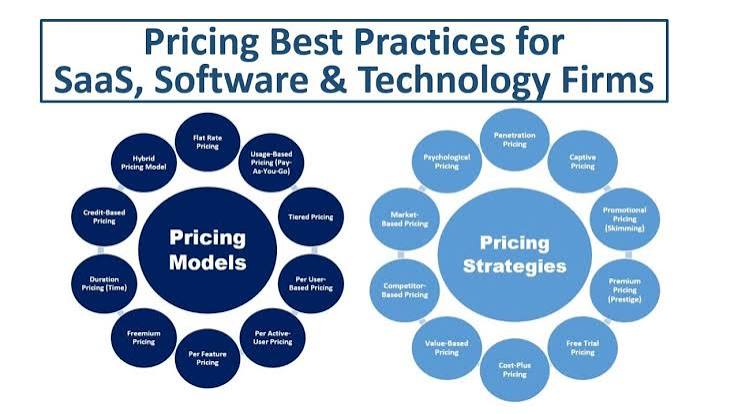
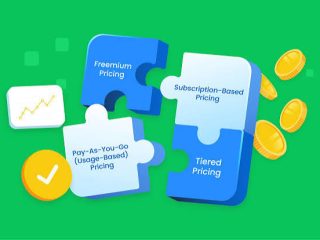
We compared 6 pricing models: free tier, per-seat, usage-based, feature-gated, and bundled plans, using the written plan pages and help centers available at the time of writing.
The real question for a small team is not “what is cheapest?” It is whether the billing model stays sane when one person leaves, one contractor joins for a month, and the team doubles for a product launch. That is why we focused on how the plans scale in practice, not on headline pricing alone.
For each tool, we looked at three things: what the free tier is actually for, what forces the upgrade, and what happens if you later export or leave. We also checked whether the vendor sells through only one channel or through multiple routes, because a small team should have a choice of billing and support paths.
Which SaaS pricing model is best for a small team?
For small teams, the best SaaS tool pricing models usually begin with per active seat and a usable free tier. That keeps fixed costs visible and lets you add people only when they create value.
That setup tends to work best for teams of 2 to 10 because the bill maps to the number of people inside the tool. It falls apart when a tool charges every viewer the same as a power user, or when an annual contract hides the real monthly burn. The math stops working fast.
Here is the shortcut we would use:
- Choose per-seat pricing when your team is small, your headcount changes, and every user needs a login.
- Choose usage-based pricing when the tool is tied to volume, such as support tickets, AI actions, or API calls, and light users should not cost the same as heavy ones.
- Choose feature-tier pricing when one advanced feature, such as SSO or audit logs, matters more than raw seat count.
- Hold off on custom enterprise quotes until you have enough scale to need procurement terms, admin controls, or compliance paperwork; if the contract terms matter, consult a qualified professional and review the vendor’s published pricing and legal docs.
The trade-off is pretty plain: per-seat plans are easier to forecast, but they can punish you when you add occasional collaborators. Usage-based plans are fairer for spiky work, though they are harder to predict if your activity jumps in a launch month.
Best overall: Notion
Notion is a strong overall pricing model for many small teams because its free tier is useful, its entry paid plan is not built around enterprise minimums, and the workspace can cover documents, wikis, and light task tracking without forcing separate licenses for every workflow.
Small teams that want one place for internal docs, SOPs, project notes, and a simple database tend to fit well here. Skip it if your team needs deep task automation, strict reporting, or a structure that behaves like a dedicated project manager.
The pricing shape matters here. The free tier is good for trying the product and keeping a small workspace alive, but the moment you need stronger permissions, more control over guests, or cleaner collaboration rules, the paid ladder starts to make more sense. For a team of five, per-seat billing can stay reasonable if only the core team needs full access.
Lock-in is the wrinkle. You can export content, but what leaves cleanly is usually the page data, not the full behavior of linked databases, formulas, and nested workflows. If your team builds a lot of process logic inside one workspace, you should assume a move later will be messy.
Pros
- The free tier is broad enough for a small team to prototype a real workspace, which means you can delay a paid plan until the team knows the system will stick.
- One page-and-database setup can cover docs and lightweight tracking, so you may avoid paying for two separate apps [no independent test of this model was found at the time of writing].
- You can buy it through multiple routes, including the brand site and major software marketplaces, so you are not boxed into a single billing path.
Cons
- Once you need tighter permissions or more structured collaboration, the free tier can feel cramped; a five-person team may outgrow it quickly.
- Export exists, but the most advanced workspace behavior does not travel cleanly, so a future migration can flatten your workflows.
- It is not the best fit if you want hard project management rules, because a flexible system can also become a messy one.
Buy this if your team lives in docs, shared notes, and lightweight tracking, and you want a per-seat model that does not punish small headcount. Skip it if your work needs strict task dependencies, complex reporting, or a structure that a new hire can follow without training.
Start the free trial.
Best for team chat: Slack
Slack is a strong pricing model for team chat because the free tier lets a small team prove the workflow, while the paid ladder exists for teams that need longer history, stronger admin control, and predictable seat billing.
It fits teams that move quickly in messages, do a lot of handoff work, or rely on channels instead of email. Skip it if your team wants chat only as a side tool and does not need to pay for shared memory.
The key pricing reality is that chat tools tend to charge for the thing you forget you need later: searchable history and governance. That is why the free tier is mainly a trial, and the paid tier becomes relevant the moment your messages turn into operational memory. For a team of five, a per-seat plan can be fine, but the cost starts to feel less friendly if everyone is only in Slack for occasional updates.
Here is the lock-in issue: export quality. Message exports are possible in some cases, but what you can retrieve and how usable it is depends on plan level and workspace rules. If your whole team treats Slack as the system of record, leaving later may mean losing the conversation context that everyone quietly depends on.
Pros
- Channels, threads, and search create a clear home for day-to-day coordination, which means less time spent hunting in inboxes.
- The pricing ladder is easy to understand for small teams: add seats when you add people, not when the vendor invents a new package structure.
- You can buy through the brand site and software resellers, so you can compare billing terms instead of taking the first quote.
Cons
- The free tier is best viewed as a starter layer, because history and admin needs can push you upward quickly.
- If your team chats all day, per-seat pricing can quietly become a steady monthly drain for conversations that do not directly ship work.
- Exports and retention rules are not the same as owning a clean archive, so long-term lock-in is more about context than raw files.
Buy this if your small team lives in channels and needs a predictable seat-based bill. Skip it if you only need occasional messaging and do not want to pay for conversation storage.
Start the free trial.
Best for work management: ClickUp
ClickUp is a strong pricing model for small teams that want tasks, docs, and reporting in one paid ladder because the free tier is broad enough to start, and the upgrade path tends to make sense once you need permissions, automation, or better admin control.
It suits teams that have outgrown a plain board and need one tool for planning and execution. Skip it if your team wants minimal setup or if your process is so simple that a spreadsheet already does the job.
The pricing reality is that tools like this often look cheap until you factor in the number of people who need real access to every list, space, or dashboard. For a team of five, the per-seat model is usually tolerable if the platform replaces two or three smaller subscriptions. If it only replaces one, the math gets weaker.
Task hierarchies and custom fields are the lock-in snag. You can export, but the export is rarely the same as a living workspace with automations and dependencies intact. That is the hidden cost of making one tool your operating system.
Pros
- One workspace can cover task tracking, docs, and basic reporting, so the team may pay for fewer separate subscriptions.
- The free tier is enough to validate the process, which means you can keep early-stage spending low.
- Multiple sellers and the brand site give you options, which is useful if you need invoicing or prefer a certain billing term.
Cons
- The platform can feel heavy if your team only needs a simple list, because a broad system often asks for more setup.
- Some of the value sits in the paid tiers, so the team may hit an upgrade wall as soon as collaboration gets serious.
- Exports do not recreate automations and dependencies with full fidelity, which makes future migration more work than a simple file move.
Buy this if your team needs a real work-management hub and can justify seat-based billing by replacing other tools. Skip it if you want a quick board that needs almost no setup.
Start the free trial.
Best simple board: Trello
Trello is a strong simple-board pricing model because it stays understandable at the free tier, and the paid ladder is mainly for teams that need extras rather than a whole new way of working.
It works for teams that think in cards, columns, and short workflows. Skip it if you need advanced reporting, complex dependencies, or a single system for docs and tasks.
The appeal here is not power; it is restraint. For a small team, that restraint can keep the bill low because you are paying for a narrow tool instead of a sprawling suite. For a team of five, the financial risk is lower if the free tier already solves the core job.
The lock-in question is softer than in heavier tools, but the trade-off is that a clean board export is not the same thing as preserving every label, rule, and attachment relationship. If your process is simple, that is fine. If your process depends on dozens of automations, you will feel the move later.
Pros
- The interface maps well to basic team workflows, so new people can often get moving with less onboarding.
- The free tier is useful for straightforward boards, which makes it a low-risk starting point.
- The paid ladder is easier to rationalize than a bundle, because you are buying extra control rather than a whole new category of tool.
Cons
- The product can become too simple once the team asks for reporting or deeper workflow logic.
- Per-seat billing still adds up if you put everyone in the tool, even if only a few people actively manage boards.
- Exports preserve less than a purpose-built system, so leaving later may require manual cleanup.
Buy this if your team needs a clear board and little else. Skip it if you want docs, dashboards, and automation in the same subscription.
Start the free trial.
Best for async video: Loom
Loom is a strong pricing model for small teams that communicate by recorded video because the free tier is enough for short updates, and the paid ladder tends to be justified only when a team needs longer use, controls, or a shared library.
It suits support teams, product teams, and remote teams that explain things visually. Skip it if your team rarely records screen walkthroughs or if text already solves the handoff.
The pricing reality is that video tools often feel cheap until recording time becomes part of the workflow. A small team of five can use the free tier for occasional explanations, but regular usage usually pushes the team toward paid access because storage, branding, and admin controls matter more once everyone records. That makes it a very specific spend, not a general-purpose one.
The lock-in question is less about deep workflow logic and more about where your recordings live and how they are shared. If you leave, the video library and links may be the part people miss most, especially when those clips have been used in onboarding or support docs.
Pros
- The free tier is enough for occasional async updates, which makes it easy to test without a budgeting meeting.
- Video handoffs can replace long calls, which means a small team can save time across multiple people.
- You can usually buy it through the brand site and other software channels, so the team has some flexibility in procurement.
Cons
- The tool is narrow
Drafted with AI; not yet reviewed by a person.




Leave a comment